 Development
Competitor price parser
A Python parser that collects a competitor's public prices into a table: price, old price, stock and link
Pricefrom $21
The money is reserved when you pay and released only once you accept the work.
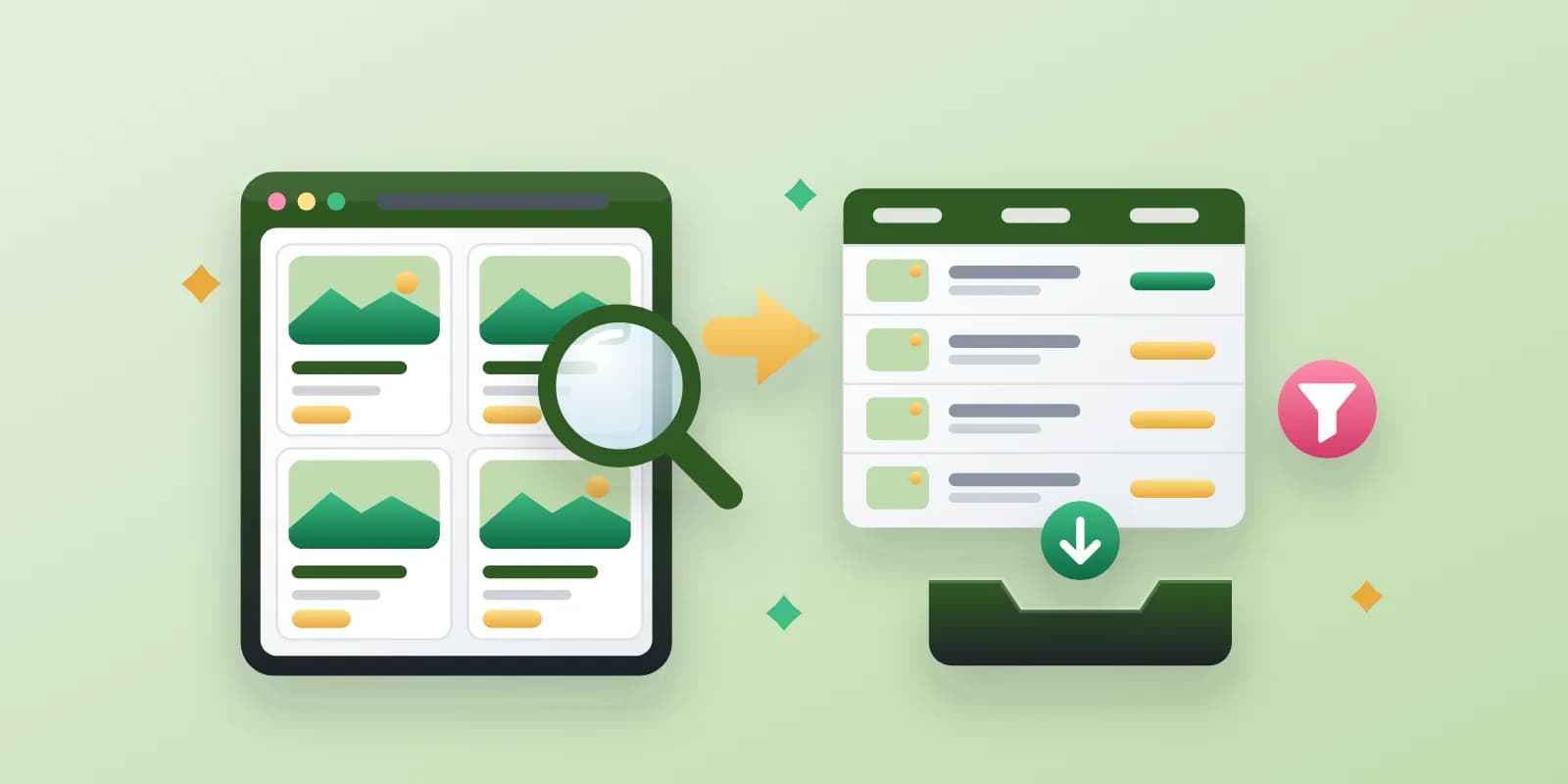
| Article | Name | Price | In stock | Weight | Photo |
|---|---|---|---|---|---|
| GT-1042 | Pruning shears, 20 mm | 18.90 | Yes | 0.24 kg | …/gt-1042.jpg |
| GT-1187 | Folding saw, 210 mm | 24.50 | Yes | 0.31 kg | …/gt-1187.jpg |
| GT-2210 | Hedge shears, wavy blade | 39.00 | No | 1.10 kg | …/gt-2210.jpg |
| GT-3305 | Hand trowel, stainless | 9.80 | Yes | 0.18 kg | …/gt-3305.jpg |
| GT-4120 | Garden hose 25 m, 1/2" | 42.00 | Yes | 2.90 kg | …/gt-4120.jpg |
The file in the example has 1,236 products from 52 list pages.
def product_links(list_url: str) -> Iterator[str]:
    """Product page links from every page of the list, following 'Next'."""
    url: str | None = list_url
    while url:
        page = fetch(url)
        for card in page.select("div.product-card a.title"):
            yield urljoin(url, card["href"])
        next_link = page.select_one("a.pagination-next")
        url = urljoin(url, next_link["href"]) if next_link else None


def fetch(url: str) -> BeautifulSoup:
    """One open page, at a polite pace: a pause between requests and a few tries on errors."""
    for attempt in range(3):
        time.sleep(settings.delay_seconds)
        response = session.get(url, timeout=30)
        if response.status_code == 200:
            return BeautifulSoup(response.text, "html.parser")
        log.warning("%s answered %s, try %d of 3", url, response.status_code, attempt + 1)
    raise ScraperError(f"{url} did not open after 3 tries")
Files: a ZIP archive with scraper.py, settings.ini (the start page, the pause between requests, the file name), requirements.txt and a README on installing and running it. It reads only open pages, one every 2 seconds, and checks the site's robots.txt first. The client runs it on their own computer.
Client: an online garden shop that resells a supplier's tools; the supplier has an open catalog on its website but no price list file. Task: go through the catalog's list pages, open every product page and save the article number, name, price, stock, weight and main photo link to Excel, to compare prices once a week.
The client and all details are made up.
A parser collects data you can see on public web pages and saves it as a table: prices and stock of products, a supplier's catalogue for your shop, listings, job posts, events or articles. Tell us the site and the pages, list the fields you need (name, price, link, picture and so on) and send one or two of those pages saved from your browser (File > Save page as) or screenshots of them. We write the parser in Python by the real structure of those pages, and it saves the results as CSV, Excel or JSON. You get an archive with the code, a settings file with the addresses and the pause between pages, and a README that explains how to install Python and run it. You run the parser on your own computer, so the data goes straight to you; we do not collect it for you or keep it. It reads only open pages, at a polite pace, and never logs in, gets around captchas or other protection, or collects personal data such as people's names, emails or phone numbers. When a site changes its layout, the parser may need an update. Whether you may collect and use a site's data under its terms is your responsibility.
The site and the exact pages: a link to a list and to an item page, and roughly how many pages there are. The fields you need, in the order of your table, with an example of each. One or two of those pages saved from your browser as HTML (File > Save page as) or screenshots, so the parser follows their real structure. The results file you need (CSV, Excel or JSON) and where you will run it.
We will ask you:
| Packages | BasicParser for one kind of page$25 | StandardList and item pages$49 | PremiumSeveral sites or page kinds$89 |
|---|---|---|---|
| Deadline | 1 day | 2 days | 3 days |
| Revisions | 1 | 2 | 3 |
| Sites | 1 | 1 | up to 3 |
| Kinds of page | 1 | 2 (list and item) | up to 3 |
| Fields | up to 10 | up to 25 | up to 25 on each |
| Goes through the pages of a list | No | Yes | Yes |
| Results file | CSV | Excel or CSV | Excel, CSV or JSON |
| Duplicates removed, resumes where it stopped | No | No | Yes |
| Order Basic | Order Standard | Order Premium |
You pay when you order, but the money is released only for accepted work.
Collecting public data is allowed in many cases, but sites' terms of use and data laws differ between countries, so you decide whether you may collect and use the data. The parser never logs in, gets around protection or collects personal data, which keeps it on the safe side.
No. You get the parser and run it yourself, so the results go straight to you and you can run it again whenever you need fresh data.
The parser works by the pages as they are now. If the site changes its layout later, the parser needs an update, which is a new order. It reads at a polite pace, but a site may still limit visits; it does not get around such limits.
No. Their terms forbid collecting their data this way, many of their pages need signing in, and they hold people's personal data. For such data, use the official API or export of the service.
No. The README explains how to install Python once, install what the parser needs with one command and run it. For pages that build their content with JavaScript, the parser uses a browser library (Playwright), which the README also covers.
Did not find your answer?
Development Development
 Development
 Development