How to write a sales proposal people read to the end
People read sales proposals fast: they open one, skim the first screen and decide whether to keep reading or close it. If the first lines say nothing about the customer's problem, nobody gets to the great terms on page three.
Here is the structure of a proposal people read to the end, and the mistakes that make them close it.
Cold and warm proposals
- A cold proposal goes to people who are not expecting you. It has seconds to hook them, so it is short: one page, one main idea.
- A warm proposal goes out after a conversation, when the customer asked for it. It can go into more detail: pricing, options, timelines, answers to the questions raised in the meeting.
Decide which kind you are writing before you start. It sets both the length and the tone.
A structure that works
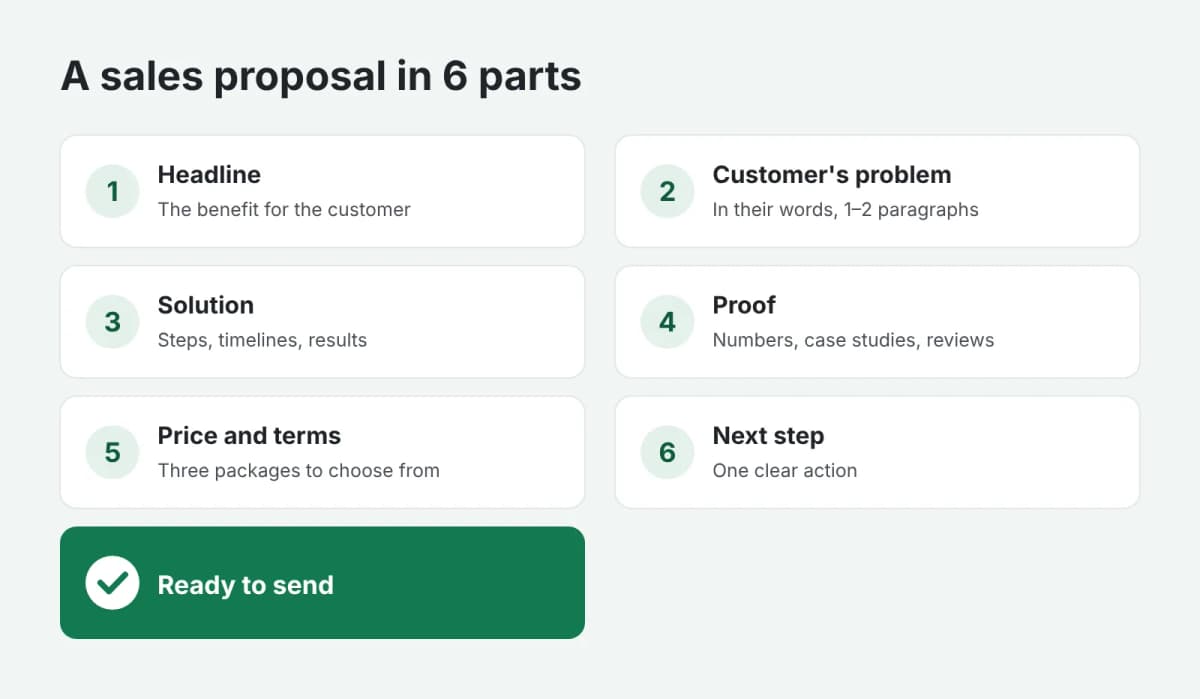
1. A headline with a benefit
Not "A proposal from Acme Inc." but the result for the customer: "Cut your delivery costs by 20% in two months". The headline should answer the question "why should I read this".
2. The customer's problem
One or two paragraphs on the problem you solve. For a warm proposal, use the customer's own words from the meeting: it shows they were heard.
3. The solution
What exactly you offer and how it works. Skip vague phrases like "a tailored approach" and "high quality"; give concrete steps, timelines and results instead.
4. Proof
Numbers, case studies, testimonials, well-known clients. One short case study with a result in numbers is enough to make a proposal more convincing.
5. Price and terms
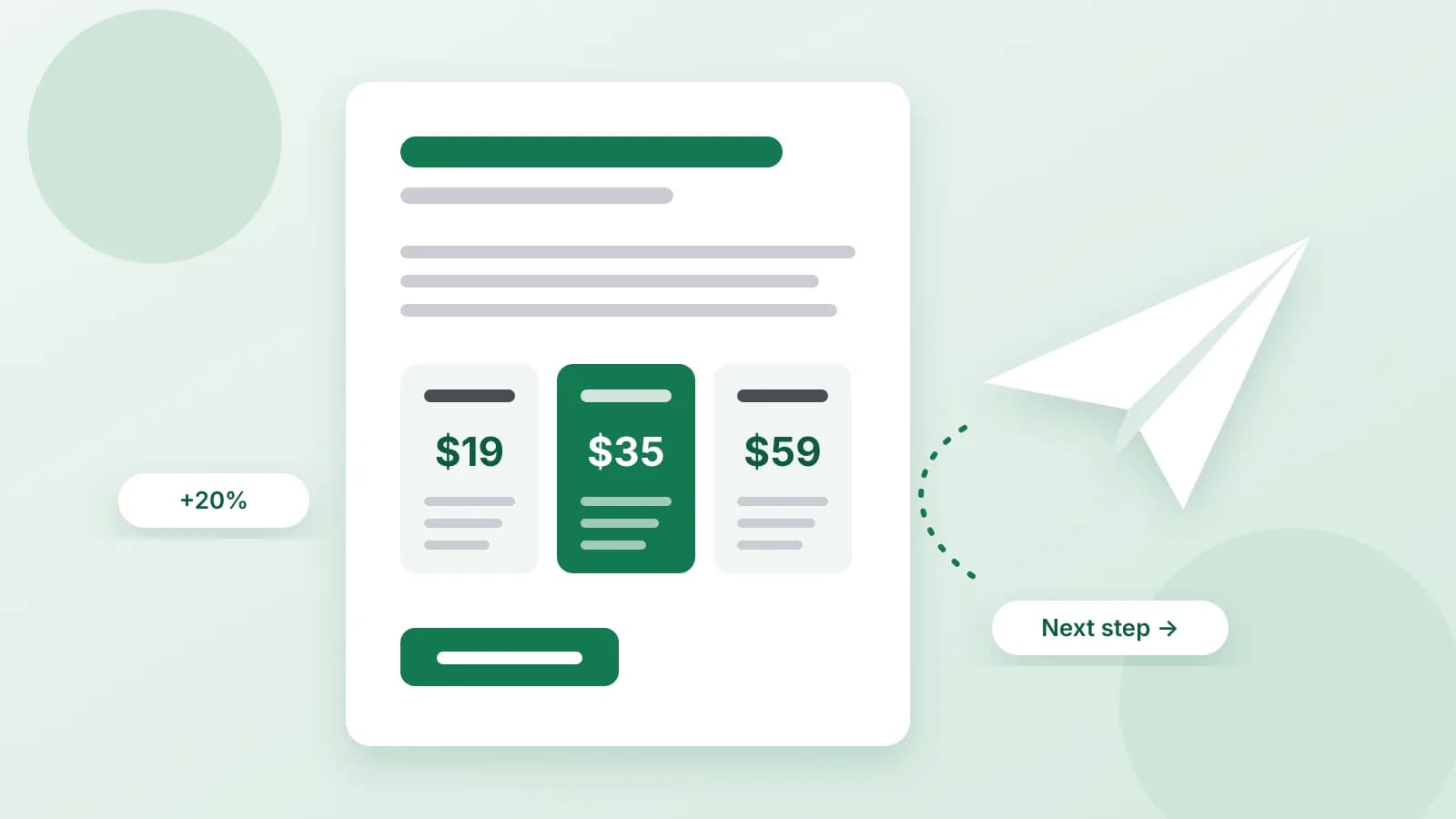
Price is not something to hide. Show it next to the value: what is included, what the customer gets, what options there are. Three packages work better than a single figure: customers compare the options with each other instead of with your competitors.
6. The next step
One specific action: "reply to this email", "pick a time for a call", "sign by Friday to get the discount". When the next step is not named, it usually does not happen.
Common mistakes
- Opening with your own story. Company history and mission are the last thing a customer cares about.
- One proposal for everyone. A template that never mentions the customer's problem reads like a mass mailing.
- Too much text. Long paragraphs with no subheadings do not get read; they get scrolled past.
- No contacts or expiry date. The customer should know whom to contact and until when the terms are valid.
A quick checklist before you send it
- Is the benefit visible in the headline?
- Is the customer's problem in the first paragraph?
- Is there at least one piece of proof with numbers?
- Is the price clear, along with what it includes?
- Is the next step named?
In short
A good proposal talks about the customer, not the company, shows the price together with the value and ends with a clear action. If you need a proposal people will read to the end, order a sales proposal, from a one-pager to a version with a designed layout. If you present it in a meeting, a presentation may help too. Payment is released only after you approve the work.