A product description that sells: structure and examples
A shopper cannot hold your product in their hands. The photos and the description do that job instead, and a good description answers the questions that would otherwise make them leave the page: what it is, whether it suits them, and why it is worth the price.
Here is a structure that works for most products, with examples.
Start with the customer, not the product
Before you write, answer two questions: who buys this product, and what problem do they solve with it? A backpack for a student and a backpack for a hiker may be similar, but they are sold with different words. One description for "everyone" usually sells to no one.
The structure
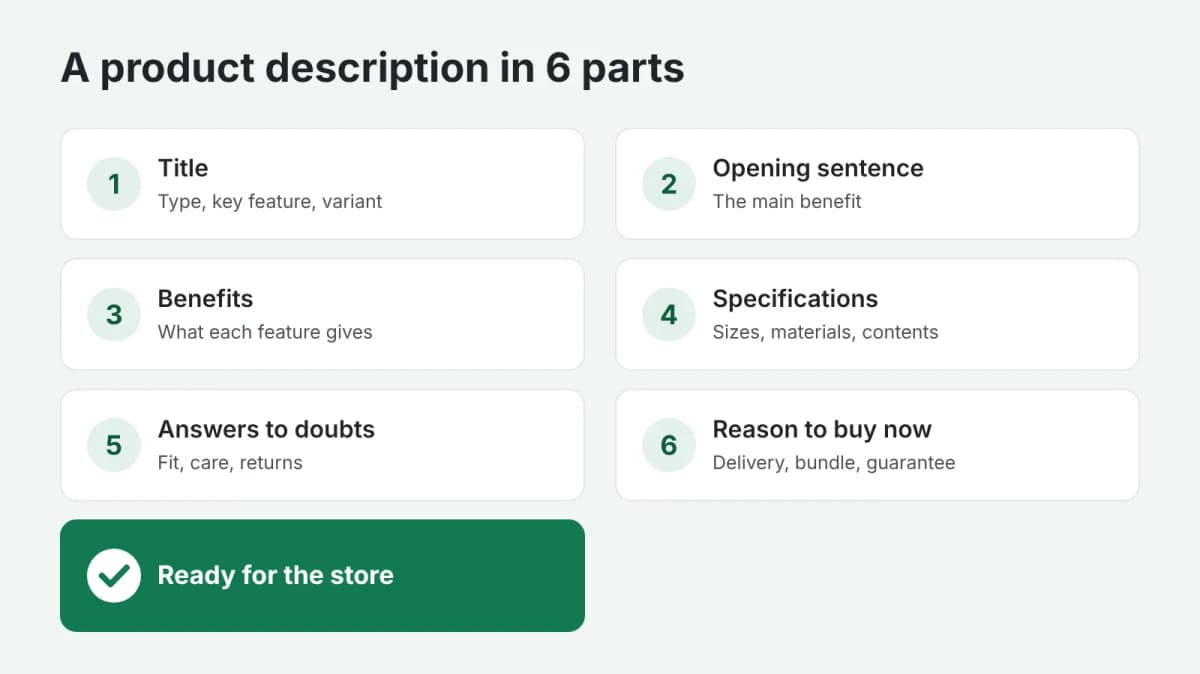
1. A clear title
The product type, the key feature and the variant: "Waterproof hiking backpack, 30 L, grey". The title is also what shoppers search for, so use the words they use.
2. The opening sentence
One or two sentences on the main benefit. Not "High-quality backpack made of modern materials" but "Keeps your things dry in heavy rain and does not pull on your shoulders on a long hike".
3. Benefits, not just features
Turn every feature into what it gives the customer:
| Feature | Benefit |
|---|---|
| 30 L volume | Fits everything for a weekend trip |
| Waterproof fabric | Your things stay dry in the rain |
| Padded back panel | Comfortable for hours of walking |
4. Specifications
Sizes, materials, weight, compatibility, what is in the box. Put them in a list or a table so they are easy to find: people who read specifications are close to buying.
5. Answers to doubts
Think about what stops people from buying: will it fit, how to care for it, what if it does not suit. Answer these in the description: a size guide, care instructions, return conditions.
6. A reason to buy now
Delivery time, a bundle, a guarantee, stock running low. Only what is true: invented urgency damages trust.
Common mistakes
- Copying the manufacturer's text. The same description on dozens of sites does not stand out and tells the shopper nothing new.
- Empty words. "High quality", "best choice" and "unique design" do not convince anyone without facts.
- A wall of text. Shoppers scan; break the text into short paragraphs and lists.
- Forgetting search. If the description does not use the words people search for, the product page is harder to find.
In short
A good product description speaks to a specific customer, turns features into benefits, gives the specifications in a clear list and answers doubts before they arise. If you have many products to describe, order product descriptions: you send a list of products and their details, and get ready descriptions in your store's style. Payment is released only after you approve the work.