Unit economics in plain words: is your business making money?
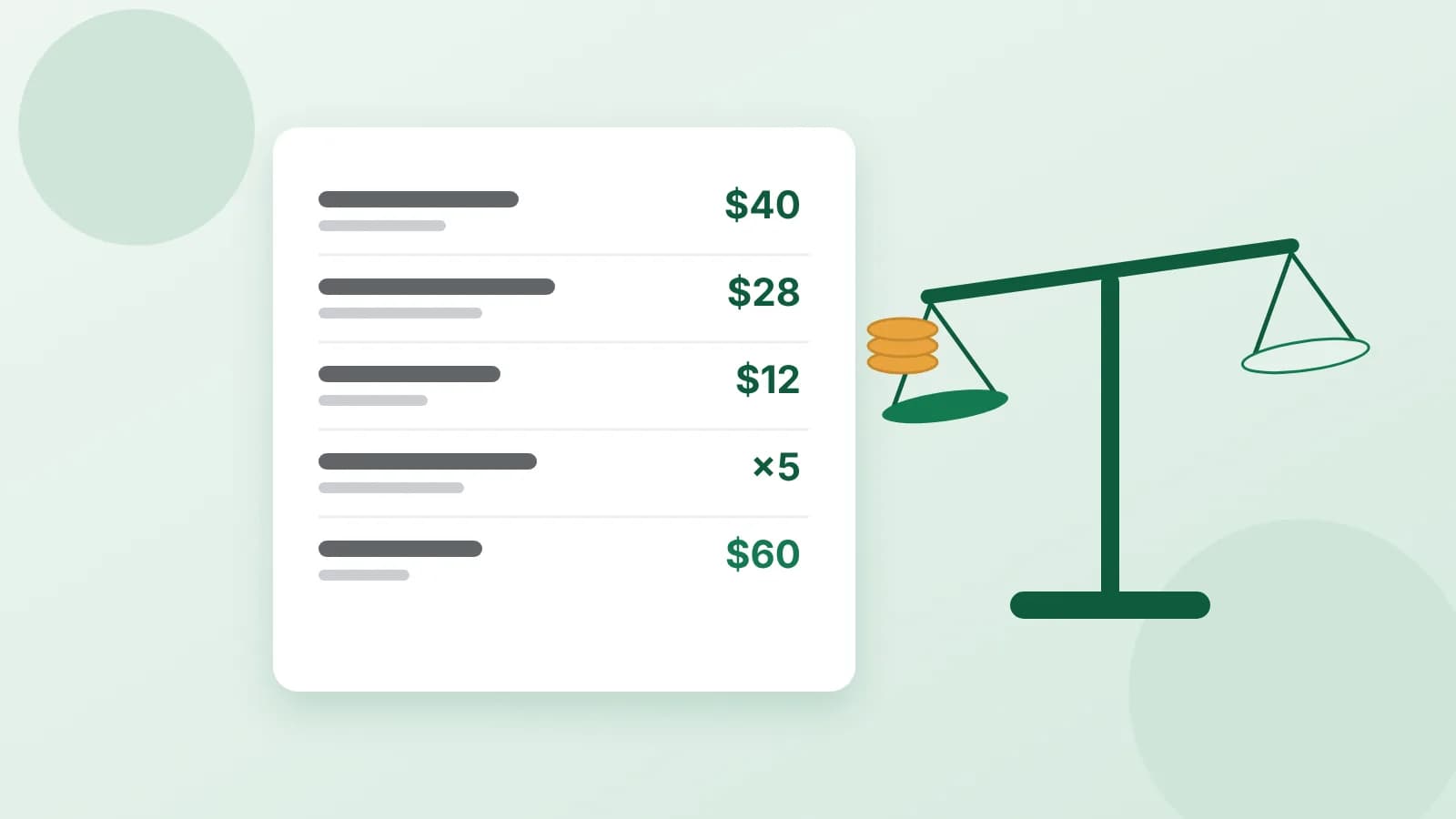
A business can grow its revenue every month and still lose money. Unit economics shows whether that is happening: it looks at a single unit of the business, such as one customer, one order or one product, and asks whether it earns more than it costs.
Here is how to calculate it in plain terms, with an example you can repeat on your own numbers.
What a "unit" is
First decide what you count. For an online store it is usually one order. For a subscription service, one customer over their whole time with you. For a café, one visit. Pick the unit that best describes how you earn money.
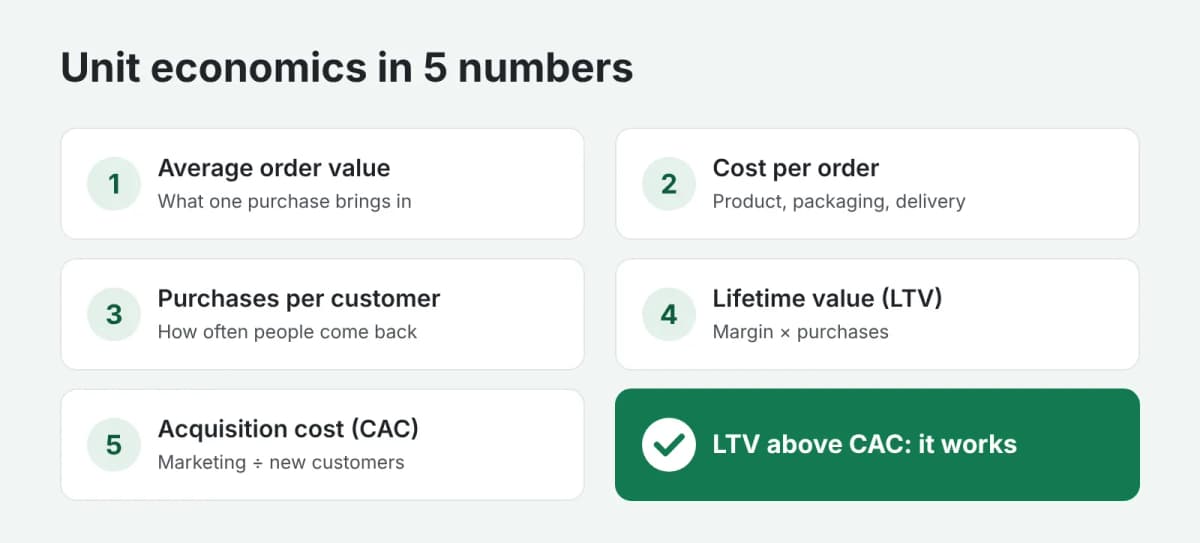
The five numbers you need
1. Average order value
How much a customer pays on average for one purchase. Total revenue for a month divided by the number of orders.
2. Cost per order
Everything you spend to fulfill one order: the product itself, packaging, delivery, payment fees. Subtract it from the average order value to get the margin per order.
3. Purchases per customer
How many times one customer buys from you on average over a year or over their whole time with you. A café regular may come back 50 times; a furniture store customer, once.
4. Customer lifetime value
Margin per order times purchases per customer. This is how much one customer earns you over the whole relationship. It is often shortened to LTV.
5. Customer acquisition cost
How much you spend to get one new customer: advertising, promotions, marketing services, divided by the number of new customers. It is often shortened to CAC.
A worked example
An online store selling coffee beans:
| Number | Value |
|---|---|
| Average order value | $40 |
| Cost per order (beans, packaging, delivery, fees) | $28 |
| Margin per order | $12 |
| Purchases per customer per year | 5 |
| Lifetime value (12 × 5) | $60 |
| Acquisition cost | $45 |
Each new customer earns $60 and costs $45 to win, so the business makes $15 per customer. That is positive, but thin: if advertising gets 30% more expensive, the margin disappears.
How to read the result
- Lifetime value is less than acquisition cost. Every new customer loses money, and growing faster only makes the losses bigger. Fix the model before you scale.
- Lifetime value is one to three times acquisition cost. The business works, but there is little room for error.
- Lifetime value is three times acquisition cost or more. A healthy model: you can spend more on growth.
How to improve the numbers
- Raise the average order value: bundles, "frequently bought together", free delivery from a certain amount.
- Lower the cost per order: a different supplier, cheaper packaging, fewer returns.
- Bring customers back: emails, a loyalty program, subscriptions.
- Lower acquisition cost: better-converting pages, referrals, channels that bring cheaper customers.
In short
Unit economics comes down to one question: does one customer earn you more than they cost? Five numbers answer it, and a simple table shows what to fix. If you want a full model with scenarios and a forecast, order a financial forecast: you get a spreadsheet with your unit economics and a plan by month. Payment is released only after you approve the work.