Proofreading vs rewriting: what each one fixes and when you need it
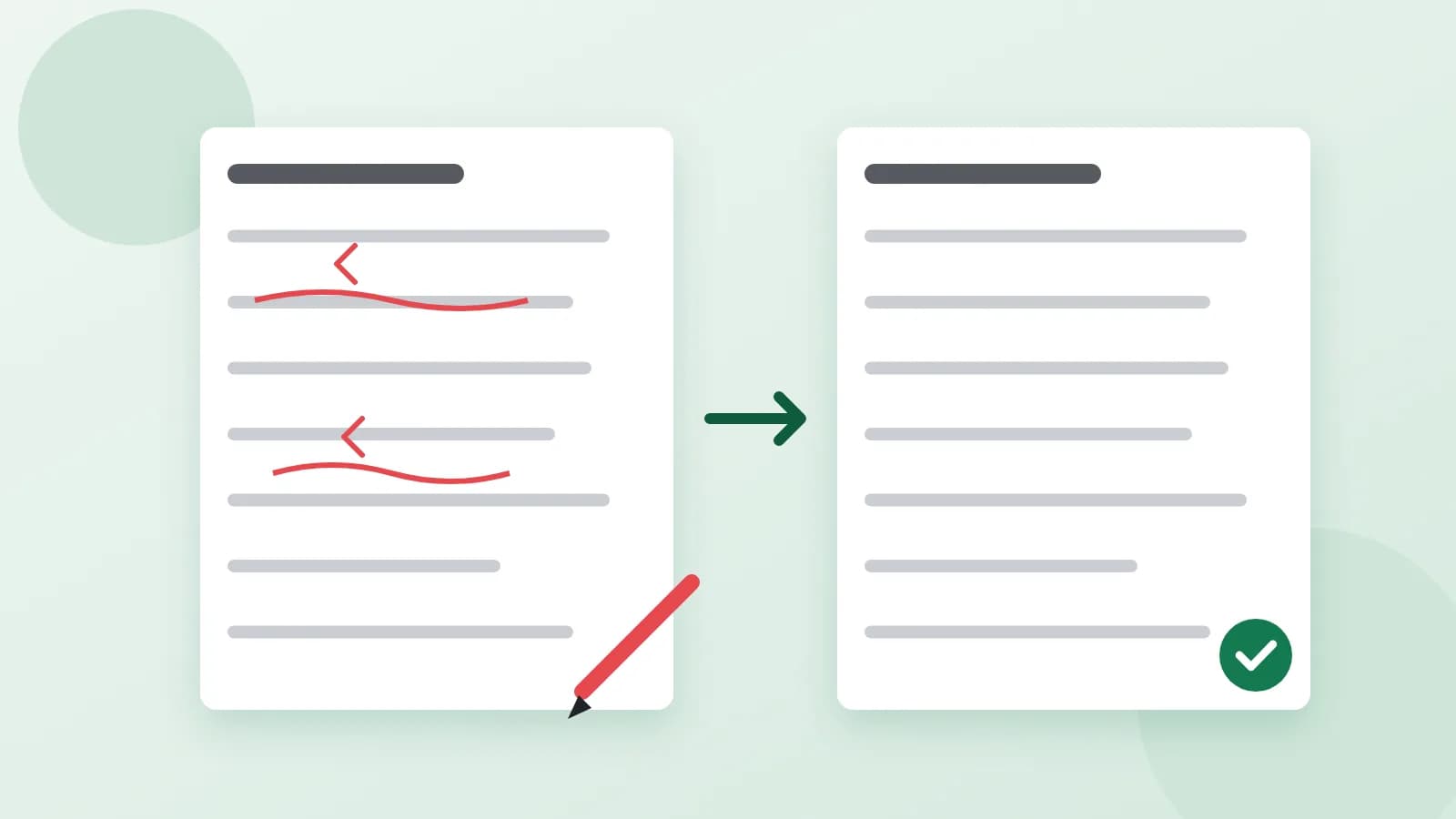
You have a text ready: a page for your website, a report, a brochure, a letter to partners. Something feels off, and you want someone to fix it. But "fix" can mean two very different things. Proofreading corrects errors and leaves your words alone. Rewriting changes the words themselves. Choosing the wrong one wastes time: a proofread will not save a confusing text, and a rewrite is too much for a good text with a few typos.
What proofreading fixes
Proofreading is the last check before a text goes out. It covers:
- Spelling and typos: "recieve", "teh", a missing letter in a name.
- Grammar: "the list of prices are" becomes "the list of prices is".
- Punctuation: commas, apostrophes, quotation marks, hyphens.
- Consistency: a product name spelled one way throughout, the same date format, "email" or "e-mail" but not both.
Your sentences, order and tone stay as they are. A good proofread is almost invisible: the text reads the same, just without the mistakes.
What rewriting changes
Rewriting works on the text as a whole:
- Structure: a better order of ideas, clear headings, shorter paragraphs.
- Tone: friendlier for customers, more formal for partners, simpler for beginners.
- Length: repetition and filler removed, long passages tightened.
- Phrasing: clumsy sentences replaced with clear ones.
What should not change in a rewrite: facts, numbers, names and quotes. Mark anything that must stay exactly as written, such as legal wording or a slogan.
How to tell which one you need
Read the text and answer honestly:
- Is the message clear on first reading? If yes, proofreading is enough.
- Is it written for the right reader? A text for engineers will not work on a consumer website without a rewrite.
- Do readers ask the same questions after reading it? The structure probably needs work.
- Is it simply full of small mistakes? That is a job for proofreading.
An example: a café called Crumb has a menu page with five typos. That needs a proofread. The same café has an "About us" page written as one long paragraph about the owner's career. That needs a rewrite.
Sometimes you need both
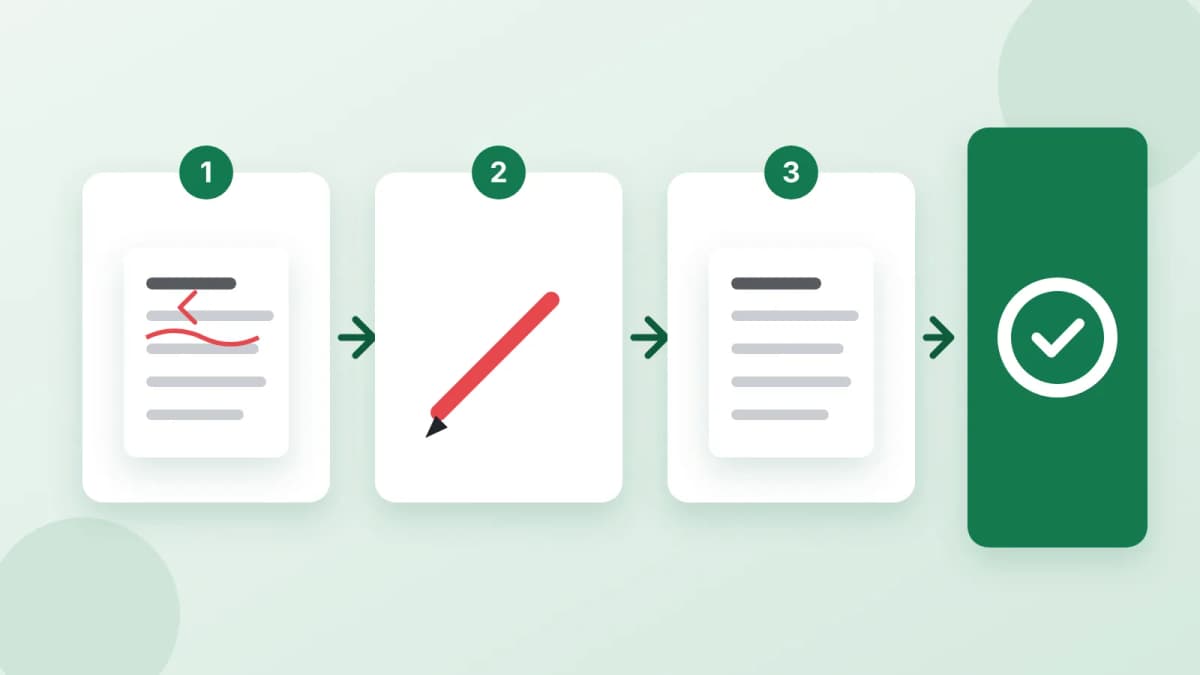
Rewriting comes first, proofreading last. If you proofread first and rewrite later, new sentences bring new errors. For an important text, such as a website launch or a printed brochure, plan both steps in that order.
What to prepare
- The text itself, pasted or as a file.
- The language and variant: British or American English, for example.
- Your style rules, if you have them: how you write dates, numbers, product names.
- For a rewrite: who will read it, what it should achieve, and what must not change.
In short
Proofreading removes errors and keeps your words; rewriting changes the words to make the text clearer or fit a new reader. If your text only needs cleaning up, order proofreading: you send a text of up to 1,000, 3,000 or 7,000 words with your style rules, and get the corrected text with a list of every change. If it needs more than that, order a rewrite: you describe the goal and the reader, and get the reworked text with a summary of the main changes. Payment is released only after you approve the work.