A welcome email sequence: what to send new customers in the first week
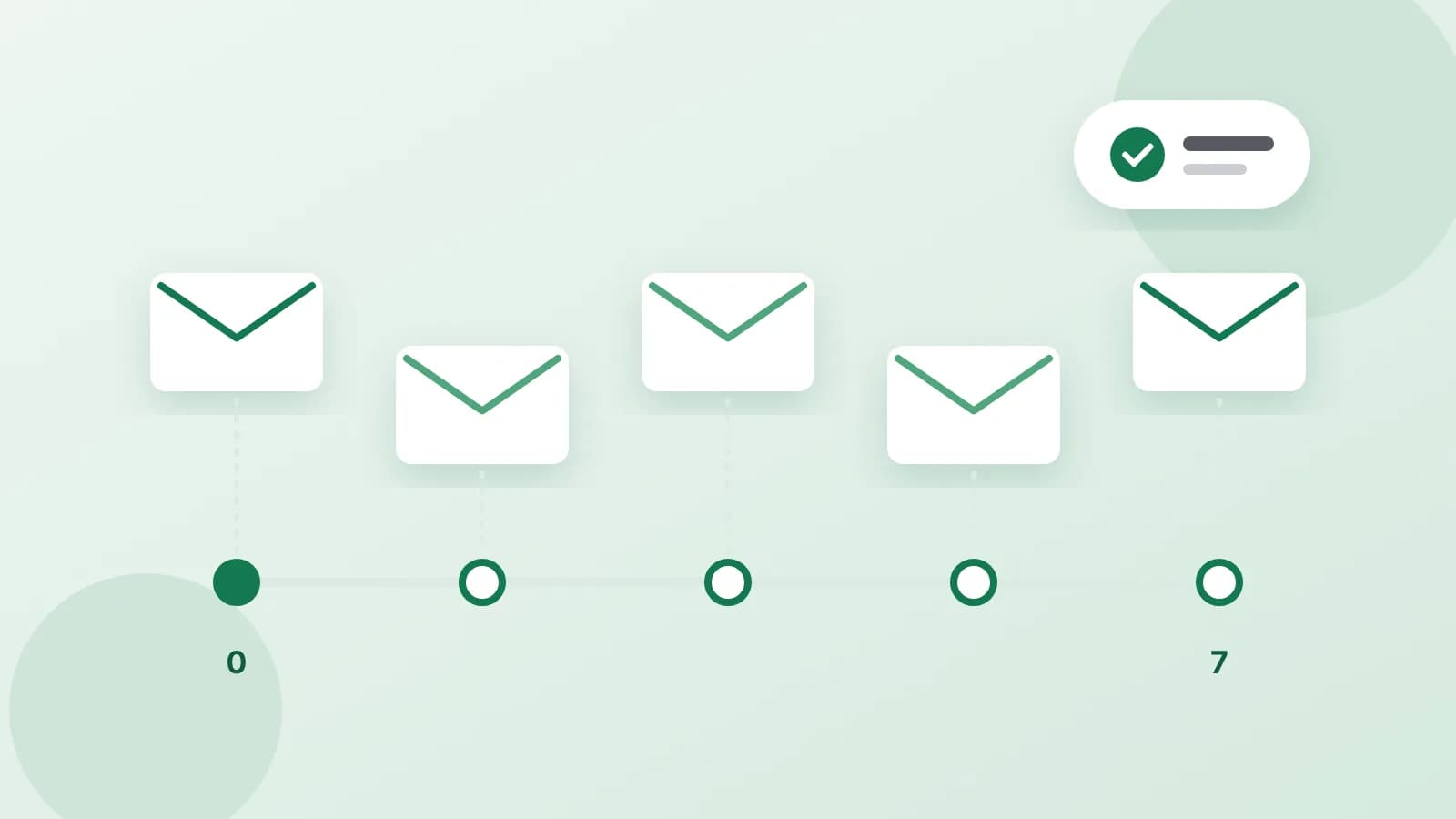
Someone has just signed up, bought for the first time or downloaded your guide. This is the moment they pay the most attention to you, and a welcome sequence makes the most of it: a few emails that introduce your brand, help the person get value quickly and bring them to the next purchase.
Here is what to send in the first week, and how to write each email so it gets opened.
Why a sequence and not one email
Welcome emails are opened far more often than regular newsletters: the person has just given you their address and is expecting to hear from you. One email cannot do everything, though. If you try to say thank you, tell your story, explain the product and offer a discount at once, the reader will skim and close it. A sequence spreads these jobs over several days, one job per email.
The first week, day by day
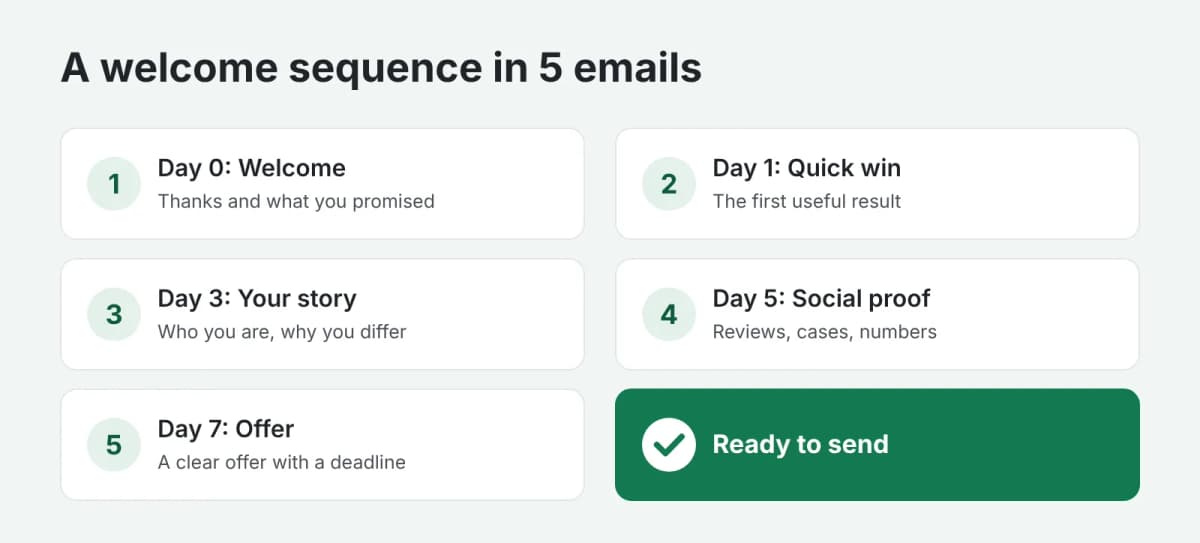
Day 0. Welcome
Send it right after sign-up. Thank the person, confirm what they signed up for and deliver what you promised: the guide, the discount code, access to the account. Add one simple next step, such as "complete your profile" or "see the bestsellers".
Day 1. Quick win
Help the person get the first result: a short guide to the main feature, a tip on how to use the product, a checklist. The sooner someone gets value, the more likely they are to stay.
Day 3. Your story and what makes you different
Who you are, why you do this and how you differ from the alternatives. Keep it short and personal: one story works better than a list of advantages.
Day 5. Social proof
Reviews, a short case study, numbers: how many customers, what results they got. People trust other customers more than the brand.
Day 7. Offer
Now is the time for a clear offer: a discount on the first order, a popular bundle, a free consultation. Give it a deadline, so it does not get postponed forever.
How to write each email
- One goal per email. One main link or button, not five.
- A subject line that promises something specific. "Your checklist is inside" works better than "News from our company".
- The preview text matters. The line shown after the subject in the inbox is a second subject line: do not leave it to chance.
- Short paragraphs. Most emails are read on a phone.
- A real sender name. A name people recognize is opened more often than "noreply".
What to measure
Look at three numbers for each email: opens, clicks and unsubscribes. If an email has few opens, change the subject line. If it is opened but not clicked, change the offer or the button. If people unsubscribe after it, it is probably too pushy or too frequent.
In short
A welcome sequence of five emails in the first week turns a new subscriber into a customer while their interest is at its peak. Write it once, and it works for every new contact. If you would rather not write it yourself, order an email sequence: you describe your product and audience, and get ready-to-send emails with subject lines. Payment is released only after you approve the work.