A contract template: the sections every agreement needs
Most business agreements, from a service contract to a supply deal, are built from the same blocks. If you know them, you can read any contract faster, spot what is missing, and prepare your own template. Here are the sections almost every agreement needs, and what each should say.
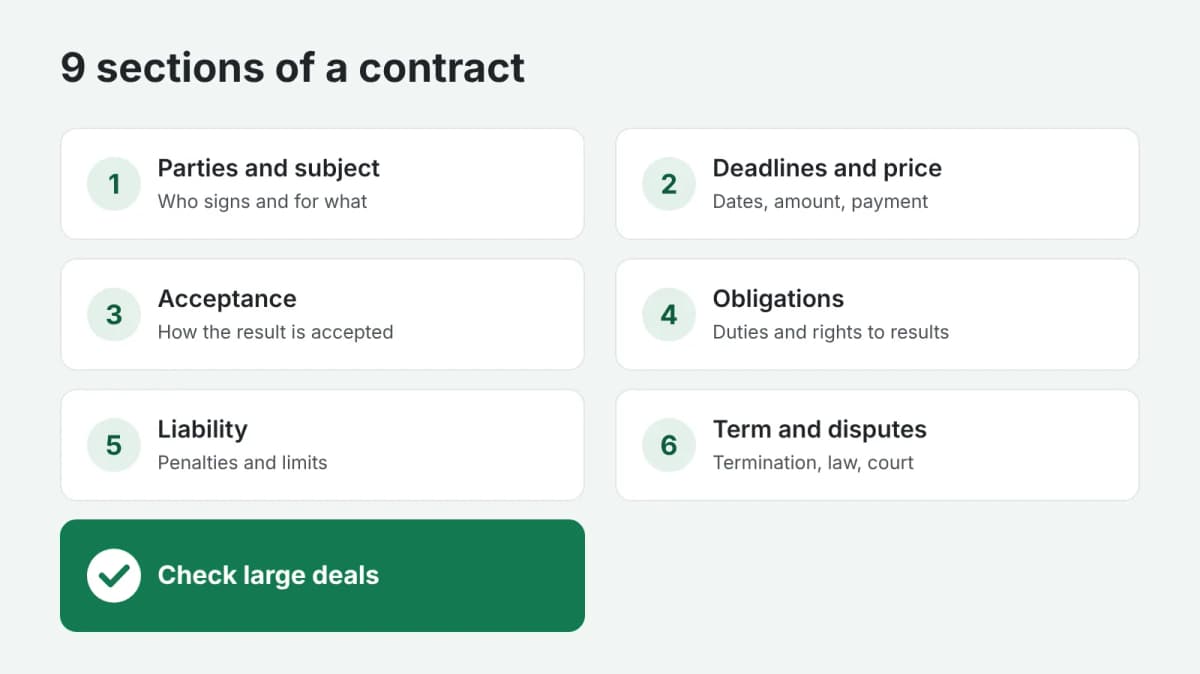
1. Parties
Who signs: full legal names, registration numbers, addresses, and the people signing with their roles. A mistake in a company name can make it harder to enforce the contract later.
2. Subject
What exactly one party does for the other: the service, the goods, the result. The vaguer the subject, the more room for disputes. If the work is complex, describe it in an attachment: a specification or a statement of work.
3. Deadlines
When the work starts, when it ends, and the intermediate milestones. Write dates or a clear rule, such as "within 10 business days after the advance payment".
4. Price and payment
The price or how it is calculated, the currency, what is included and what is not, the payment schedule (advance, milestones, final payment) and the payment method.
5. Acceptance
How the result is handed over and accepted: who checks it, how long they have to do so, how comments are made, and what happens if nobody responds. Many disputes start here.
6. Rights and obligations
What each party must do: provide materials and access, keep to the schedule, report problems. Also, who owns the result, for example the rights to texts, designs or code.
7. Liability
What happens if someone breaks the contract: penalties for delays, limits of liability, and circumstances beyond the parties' control.
8. Confidentiality
What information must be kept secret, for how long, and the exceptions.
9. Term, termination and disputes
How long the contract lasts, how either party can end it early, which law applies, and how disputes are resolved: negotiation first, then a specific court or arbitration.
Mistakes that cause disputes
- A subject described in one vague line.
- No acceptance procedure: the work is done, but nobody can say when it was accepted.
- Different deadlines in the contract and its attachments.
- Copying a template from another country without checking that it fits your law.
A template is a starting point
A good template saves time and makes sure nothing important is forgotten. Laws differ between countries, though, so for large deals or unusual terms it is worth having the final version checked by a lawyer in your jurisdiction.
In short
Parties, subject, deadlines, price, acceptance, obligations, liability, confidentiality, term and disputes: nine sections that make a contract clear. If you need a ready template or website policies, order contract templates: you describe the deal or your site, and get a structured draft with notes on each clause. Payment is released only after you approve the work.