How to write a resume that gets read: 7 rules
A recruiter looks at a resume for a few seconds before deciding whether to read it properly. In that time they need to see who you are, what you are good at and why you fit this particular job. Everything else is detail.
Here are seven rules that help a resume get past those first seconds.
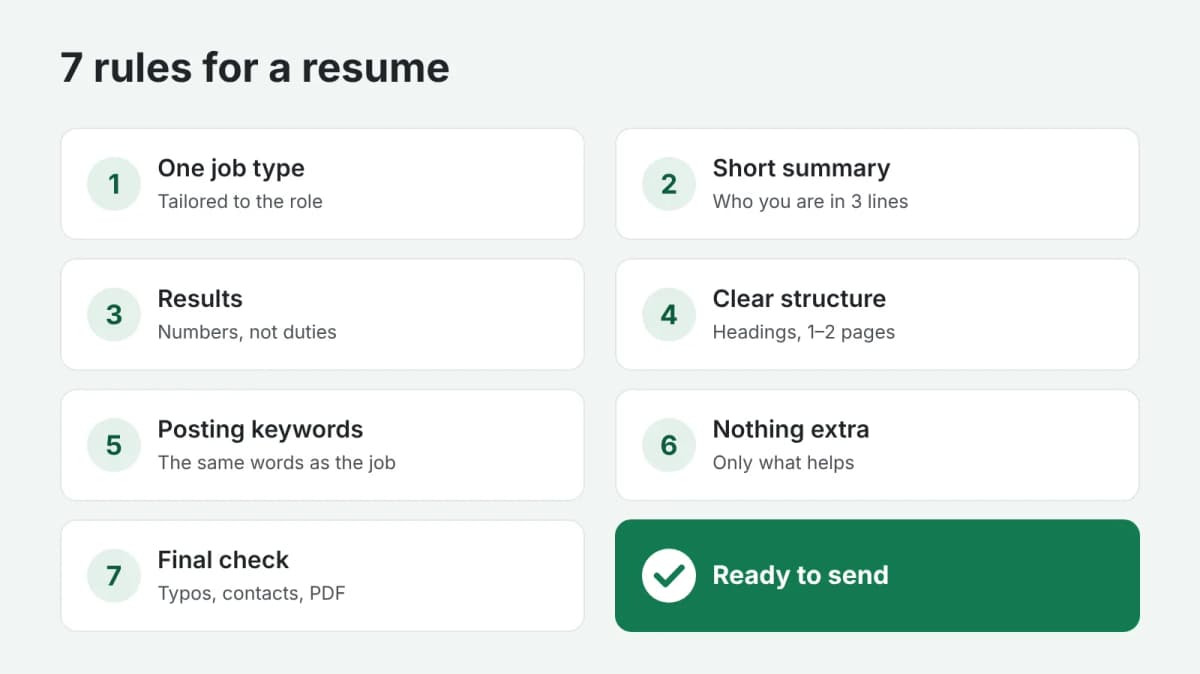
1. One resume for one type of job
A resume that tries to fit every job fits none. Adapt it for each kind of position you apply for: move the most relevant experience up, use the words from the job posting, drop what does not matter for this role.
2. A short summary at the top
Two or three sentences under your name: who you are professionally, your main strength and what you are looking for. For example: "Marketing manager with 6 years in e-commerce. Grew online sales of a home goods brand from $1M to $3M a year. Looking for a team lead role."
3. Results, not duties
"Responsible for social media" says what you were supposed to do. "Grew Instagram audience from 5,000 to 40,000 in a year" says what you did. For each job, give two or three results, with numbers wherever you can.
4. A clear structure
Contacts, summary, experience (newest first), skills, education. Use headings, the same date format everywhere and plenty of white space. One or two pages are enough for almost everyone.
5. Words from the job posting
Many companies screen resumes with software that looks for keywords from the posting. If the job asks for "project management" and "Jira", and you have that experience, use exactly those words.
6. Nothing extra
Leave out a photo unless it is customary in your country, your full address, marital status, hobbies that have nothing to do with the job and experience from twenty years ago that does not help now.
7. Check before sending
Typos are one of the most common reasons a resume gets rejected. Read it aloud, check that your phone and email are correct, and save it as a PDF named with your name, for example "Anna-Smith-Resume.pdf".
What about the cover letter
A short cover letter helps where the resume cannot: it explains why you want this particular job and how your experience fits it. Three paragraphs are enough: why this company, what you bring and a call to talk.
In short
A good resume is written for a specific job, starts with a strong summary, shows results with numbers and is easy to scan. If you would rather have it done for you, order a resume and cover letter: you send your experience and the job you want, and get a resume that shows your strengths. Payment is released only after you approve the work.