Competitor analysis in one evening: what to look at and how to put it in a table

You do not need a research agency to understand your market. One evening, a browser and a spreadsheet are enough for a first competitor analysis that answers the main questions: who you compete with, what they offer, at what price, and where there is room for you.
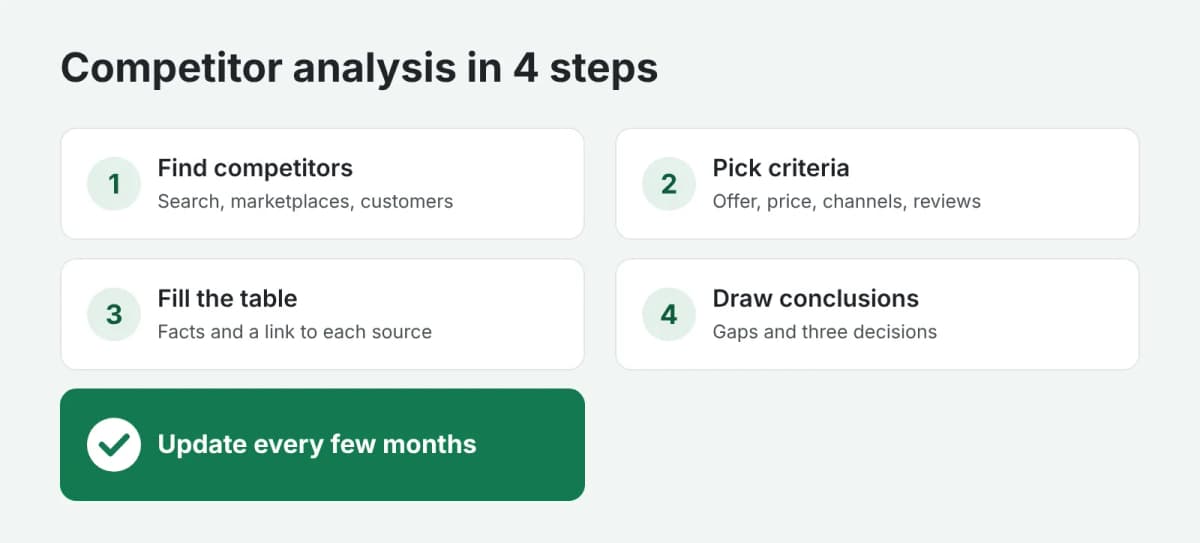
Step 1. Find your real competitors
Competitors are not only the companies that sell the same thing. They are everyone your customer might choose instead of you.
- Search. Type the phrases your customers use into a search engine and note who appears on the first page, including ads.
- Marketplaces and maps. Look at who sells in your category and who is near you, if location matters.
- Ask customers. "Who else did you consider?" is the most honest source.
Pick five to ten competitors. More than that will not fit into one evening.
Step 2. Choose what to compare
Keep the list short and the same for everyone, otherwise the table will be impossible to read. A good starting set:
- Offer: what exactly they sell and to whom.
- Price: the entry price and the most popular option.
- Promise: the main message on their home page, in one line.
- Channels: where they get customers: search, ads, social media, marketplaces.
- Reviews: the average rating and what customers praise and complain about.
- Strengths and weaknesses: what they do better than you, and where they fall short.
Step 3. Fill in the table
One row per competitor, one column per criterion. Write facts, not impressions: "from $29 per month" rather than "cheap". Keep a link to the source of each fact, so you can check it later and update the table in six months.
Reviews are the most valuable column. Read the negative ones: customers' complaints about competitors are a ready list of what you can do better.
Step 4. Draw conclusions
A table with no conclusions is just homework. Finish with three short sections:
- What everyone does. These are the market's basic expectations: you need them too, but they will not make you stand out.
- What nobody does well. The common complaints and the gaps: this is your chance.
- Three decisions. For example: change the price of the entry package, add a guarantee that nobody else offers, start working in a channel your competitors ignore.
Common mistakes
- Comparing yourself only with the market leader. Look at those of your size too.
- Copying a competitor's price without knowing their costs.
- Doing the analysis once. Markets change: update the table every few months.
In short
A simple competitor analysis takes one evening and gives you a clear picture of the market and a few concrete decisions. If you do not have that evening, order a market and competitor overview: you name your business and market, and get a structured overview with sources, a comparison table and recommendations. Payment is released only after you approve the work.